
Winter electricity and additional production
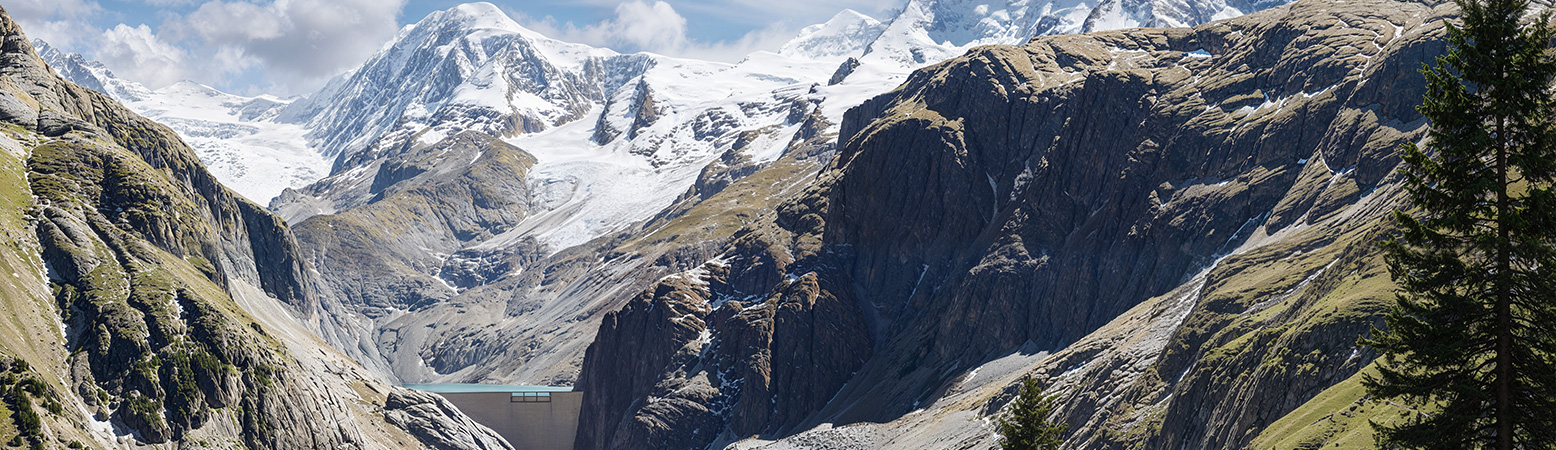
In synergy with the existing Grande Dixence infrastructure, the Gornerli reservoir would transfer a maximum of 650 million kWh of electricity production from summer to winter This value corresponds to a theoretical maximum value, resulting from the shape of the valley and the future inputs of the Gornera. The actual volume, which is still being studied, also depends on future exploitable inputs throughout the entire Grande Dixence catchment area. These studies in turn depend on climate scenarios – an important basis for this being the latest CH2025 climate analysis from November 2025 – as well as on current legislation. Gornerli will thus make a significant contribution to the security of electricity supply within the country, especially in winter, when Switzerland has increased electricity needs.

With Gornerli, the total output of the Grande Dixence system will increase by a maximum of 200 million kWh net per year, corresponding to the annual production of 12 medium-sized
wind farms or the consumption of more than 40,000 Swiss households. This value will depend on future inputs and the retreat of the glacier. Part of the previously unused water volumes from the Gornera catchment area will be stored and used for electricity production, in compliance with environmental guidelines and compensation measures. In addition, the new Gornerli pumping station, located approximately 240 metres higher than the existing one at Z’Mutt, will save a large amount of pumping energy.
The project will also provide additional income in the form of water charges and taxes, in particular for the Municipality of Zermatt, but also for the Canton of Valais and the other licensing municipalities. Finally, the future co-owners, in particular the current licensing municipalities and the Canton, will benefit directly from the enhancement of the existing Grande Dixence infrastructures. Other benefits could provide the region consist of optimising the technical snowmaking facilities on the ski slopes of the Zermatter Bergbahnen or developing prerequisites for greater security of the local energy supply in a narrow collaboration with the local distributor (EWZ).

“The Gornerli is a key piece of the puzzle in Switzerland’s energy future.”
Albert Rösti, Federal Councillor and Head of DETEC
FLOOD PROTECTION
Climate change is causing an accelerated melting of glaciers, an intensification of extreme precipitation and consequently an increased risk of flooding.
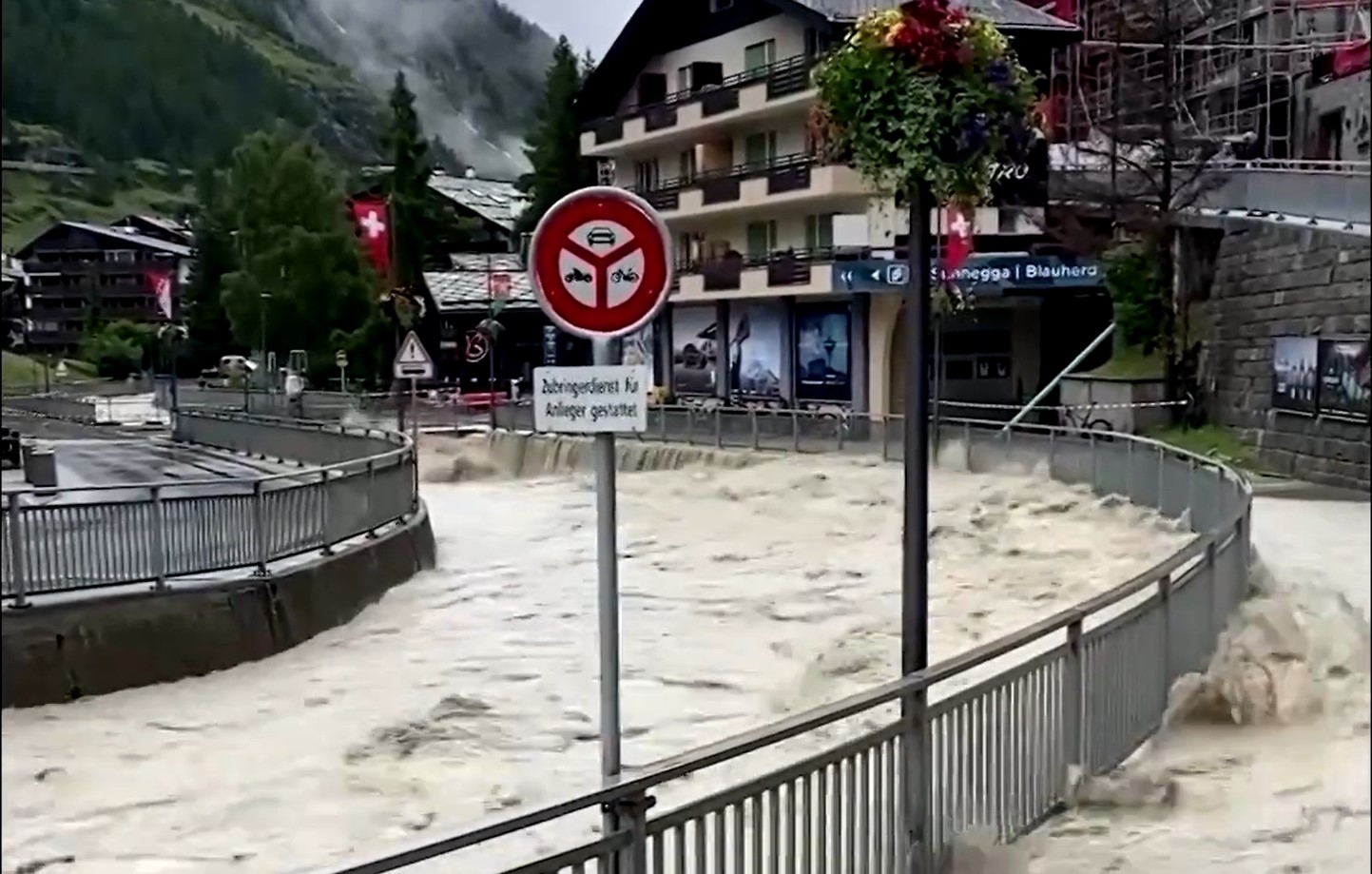
In this respect, the Gornerli reservoir will play a key role in the region, allowing a significant volume of water to be absorbed and stored during periods of heavy precipitation or during sudden draining of glacial lakes. It will significantly reduce downstream damage during flooding.
The two flooding episodes in June 2024 showed the urgent need for Zermatt and the Mattertal Valley to improve flood protection. The planned reservoir volume in Gornerli would have prevented these two incidents (with the exception of the damage caused by the Triftbach). In the future, it will be able, in the event of flooding, to retain almost half of the water flowing into the Mattervispa in Zermatt and thus reduce the risks associated with flooding, not only in Zermatt, but also throughout the Mattertal as well as in the Val d’Hérens and the Rhone Valley.
“The Gornerli improves flood protection in Zermatt but also has a positive effect on the overall flood protection of the Vispa, all the way down to Visp.”
Romy Biner-Hauser, Mayor of Zermatt
WATER SUPPLY
Ensuring a secure supply of drinking, irrigation or industrial water is a necessity, particularly against the backdrop of climate change. In the future, water needs will continue to grow, especially in the municipalities of Zermatt and Visp, while droughts will become longer and more frequent. The retreat of the glaciers will also reduce the availability of water during dry periods. To avoid future water shortages, we must raise awareness among the general public and in industry. Most importantly, however, the existing water supply systems must be improved and new, secure reservoirs must be built. In this context, the Gornerli reservoir can play a central role as a water reservoir for the entire region.
In the Zermatt Valley, solutions are being sought to secure the regional water supply in the long term. Gornerli can be part of this solution.

“The large capacities of Alpine reservoirs mean they are hugely important for the integrated management of water resources.”
Prof Emmanuel Reynard, Professor of Physical Geography, University of Lausanne